The Flood Times
By Toria Callow, Resiliency Coordinator
I’m familiar with the ebbs and flows of water. For five years, I worked for a small landscape architecture firm where I was the watershed coordinator for the Upper White River watershed and the Upper Mississinewa watershed. I’ve studied topographical maps and tested creeks, ditches, and ephemeral waterways. I’ve been waist-deep in rivers and watched streams get taken out by erosion. I’ve studied maps and seen photos of the great 100-year flood in 1913. None of this prepared me for the events of this past summer, when a “regular rainy Wednesday in Muncie” took a week to stop.
I am lucky enough to own my home, something that most of my peers haven’t even begun to think about. However, as I have learned over the past five years of single homeownership, the effects of extreme weather can have devastating financial repercussions, even for those of us who are privileged enough to own our homes. The resulting flooding from that “regular rainy Wednesday” left over $15,000 in out-of-pocket property damage, even with flood insurance.
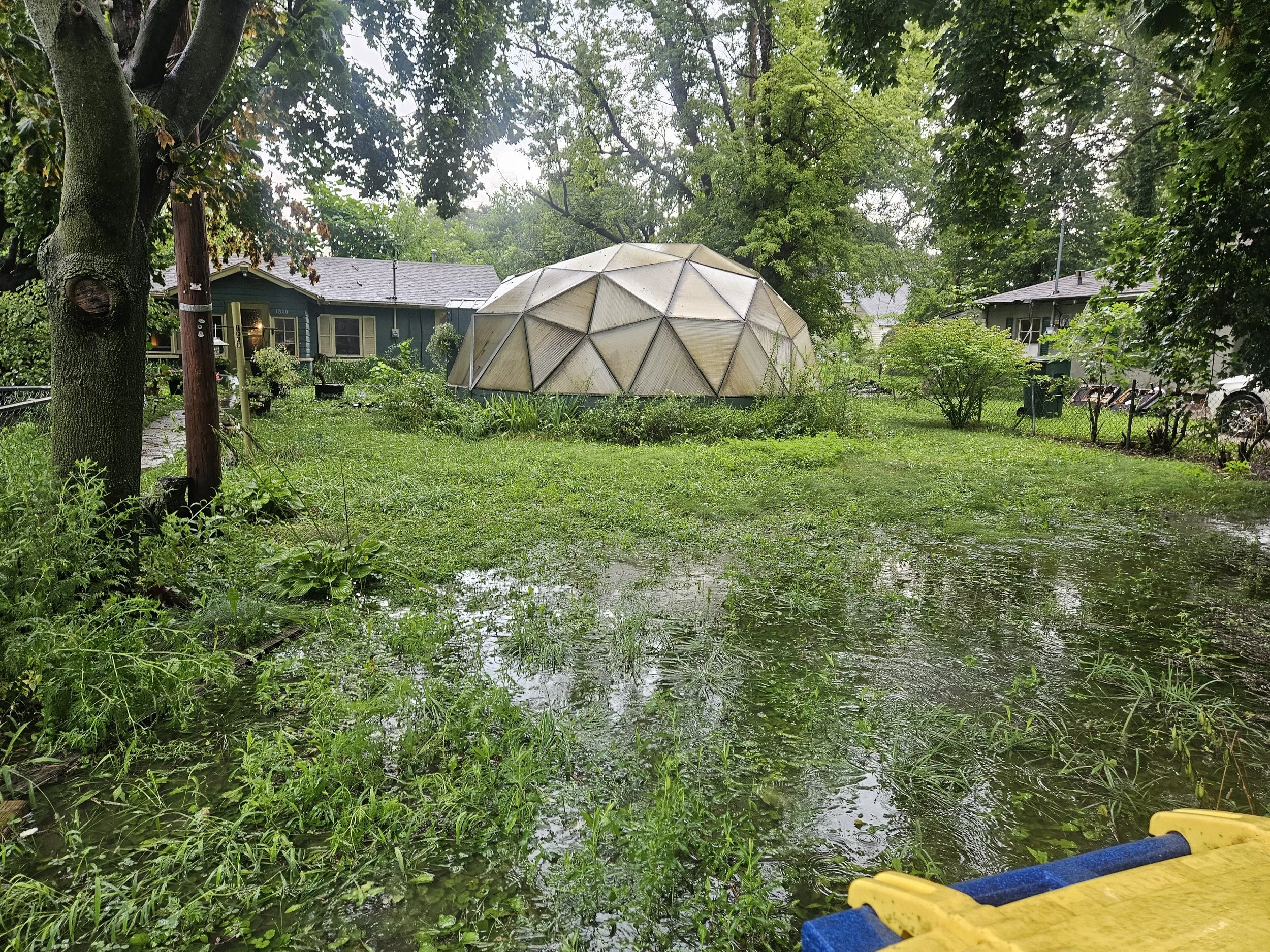
Many of the houses in the Southside neighborhood of Muncie were built en masse in the 1930s on concrete slabs to house factory workers, mine included. My home is topographically lower than my neighbors. Usually, when it rains in the Midwest, people complain of their basements flooding. With nowhere for the water to go below my home, it naturally finds a low place to settle on the slab until the nonporous clay soil relents and absorbs it.
Before the storm, I had already dealt with a few weather-related mishaps. Earlier in the summer, a thunderstorm came howling through. Strong winds snapped two large maple branches at my house, taking the power out, crushing the mailbox, and leaving a low-hanging power line blocking my exterior doorway, entrapping me inside for 12 hours. My house had flooded one other time too. In April of 2023, it rained 4 inches in less than 18 hours where water seeped into my back bedroom, but this most recent storm was far more devastating.
On Tuesday, August 11, the rain began. The river rose like usual, but unlike in the past, it kept raining. The sun rose on August 12th, and it was still raining. The neighborhood flooded quickly as over 11 inches of water fell in just under 48 hours. What started as a damp rug turned into two inches of water covering the floor and seeping into and onto everything I owned.
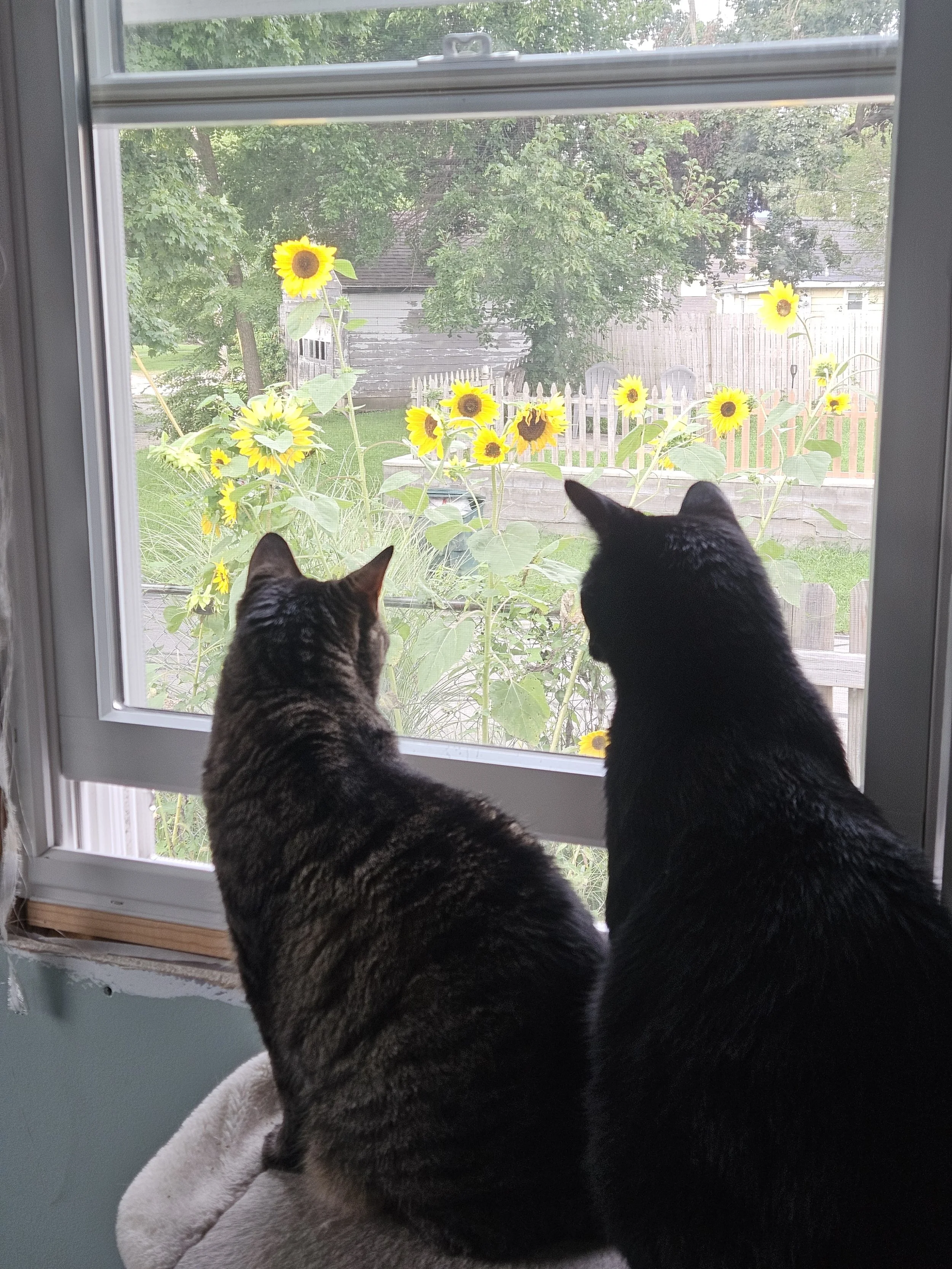
My two cats were not pleased with this new feature of the house, so I quickly packed them up into the car along with whatever I could keep dry and abandoned what was too heavy to move.

Within 24 hours of water intrusion, and the perfect conditions in the summer heat, mold began to grow. The next days and weeks were a blur. I came to rely on help from friends, borrowing a shop vac, a dehumidifier, and two high-powered fans to try and keep air circulating through the house and damage at a minimum. One friend even let me and the cats stay with them since my home had become unsafe for habitation, which started as a one week promise that quickly turned into seven weeks.
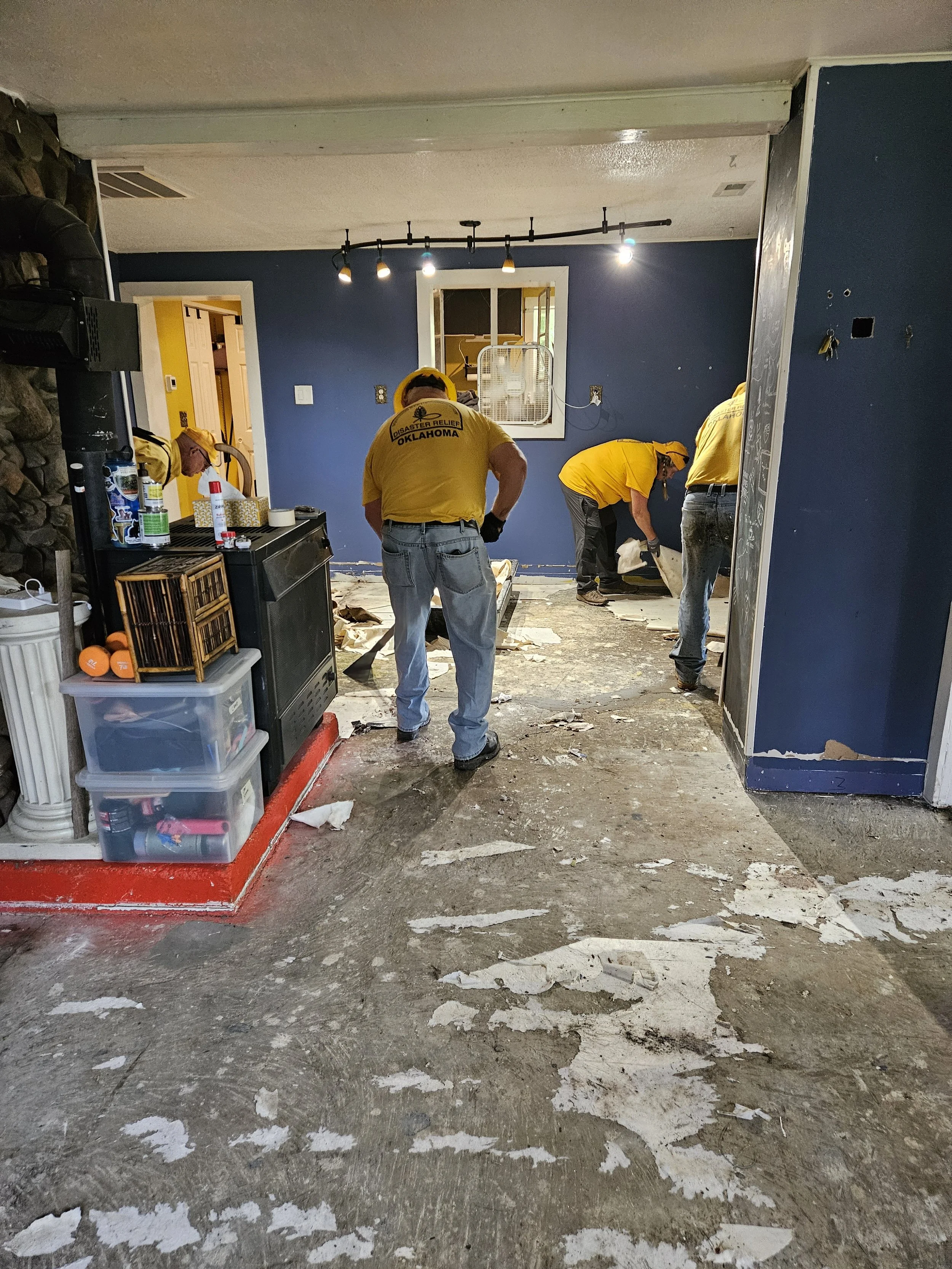
I had to take an enormous amount of time off work to clean up the damage and navigate logistics with my insurance provider. The communication was spotty and unclear through the entire process. I submitted a claim the day of the flood, but I waited and waited for answers. The vinyl plank flooring was ruined beyond repair and needed to be removed, as mold grew underneath. It took 10 days for an adjuster to come and assess the damage, and four more weeks to hear back about whether they’d cover the necessary work. Repairing the damage would cost nearly $15,000, and after seven weeks displaced from my home, I was awarded $5,000. I was able to use the money to cover some of the cost of being displaced and purchase new flooring from Habitat for Humanity, but as you can imagine, that didn’t really cut it. A group of disaster relief volunteers helped gut my house and spray for mold 5 weeks after the flood. While this was incredibly helpful, there is still a load of work that has fallen on my shoulders, to be completed between work and family obligations.
I began my role as a Resiliency Coordinator with Earth Charter Indiana on August 1, about a week before my house flooded. This was month 10 of what I affectionately called my ‘fun-employment' period, after I left my job in September 2025 to pursue a different career path. In that time, I’ve worked two part-time jobs and sustained myself on contract work. Despite hundreds of job applications and dozens of interviews that led nowhere, I found myself approaching one year of no job leads. With 10 years of experience, two degrees, a laundry list of skills, and amazing references, I haven’t been able to find a position in my field that has benefits or pays enough to keep me afloat. While the work was “fun,” there were also long hours, sleepless nights, piles of bills, inconsistent pay, health issues, and general anxiety. “Is this the month I can’t pay the mortgage? Or the car payment?” The list goes on.
When I started writing this blog in September, I wasn’t sure where this saga would end. I have lived in Muncie for 11 years. I built a life and community through every struggle and new growth spurt. Muncie carried me through undergrad; it welcomed me back when I had to return to the United States from teaching in Colombia during COVID; it was my home through grad school, through trips to Cincinnati taking care of my late grandfather, through my first several jobs, and through a really low spot in my career and life where I wondered if pursuing my dreams was worth the cost.
It feels bittersweet to be writing the end of this blog from my new apartment in Chicago with my cats curled up, asleep in the dappled morning sunlight. In a strange and serendipitous turn of events, coupled with a whole lot of tenacity and determination, I interviewed for and accepted a job here working for a non-profit food pantry. I am thankful for the new chapter and fresh starts in the midst of tumultuous ends. Of course, this new job didn’t solve all of my woes. I still need to finish repairs on my home in Muncie and do my best to recover financially and emotionally from the past several months. My love of water that has been with me since childhood has a new brushstroke of reverence mixed with fear.
As the impacts of climate change intensify, erratic and extreme weather events such as this one will only become increasingly common. When we forgo nature, pave the banks of streams in concrete, remove ephemeral waterways from fields, and strip rivers of their riparian buffers, we increase flooding and its impact on our communities and those downstream. This is a local challenge, as well as a global one. We need to address this challenge with local resilience in our communities and with public administration that meets the needs of Hoosiers in crisis.
I don’t know where I’d be without friends letting me stay on their couches, the support of my aunt with late-night food deliveries and construction loans, and all the other people cheering me on and lending me a hand. Yet, I still consider myself lucky. There are many residents in Muncie and across Indiana who did not fare so well under these circumstances, for whom the consequences may be homelessness, hunger, or even death. Watershed management and resilience planning is not a “nice to have,” but a necessary infrastructure for our future. Unchecked development and poor regulation only make this matter worse. With more investment in planning and qualified professionals, our communities could have a fighting chance the next time severe weather comes knocking at our door.