
Saving Rocky Ripple: The night we worked together as one
By Jim Poyser, ECI’s Director of Advancement
I was born of a worry wart. By mastering the art of worry, Sue Poyser did extraordinary things. She kept planes aloft in the sky with her worries. She prevented cars from running over her children. She kept tetanus from causing us lockjaw. And when her husband — my dad — got MS, well, the worries just compounded. Yes, I grew up worried. Worried about everything. Worried about worrying too much.
My siblings and I joke that’s just how we show love for each other. We worry about each other. Instead of ‘I love you,’ we say, ‘I worry about you.’
So this offspring of a worrier grew up worrying about pretty much everything. So then imagine what it’s like to unearth the single most worrisome subject in the history of humankind for I surely found a goldmine in climate change.
I am Jim Poyser, and I am a climate catastrophist.
This climate catastrophist was at the center of a local climate catastrophe, the weekend of August 14, in Rocky Ripple.
This tale is about the night that making connections saved a neighborhood, but it’s also the story of the night my fears of a climate catastrophe came true. Or at least close to true.
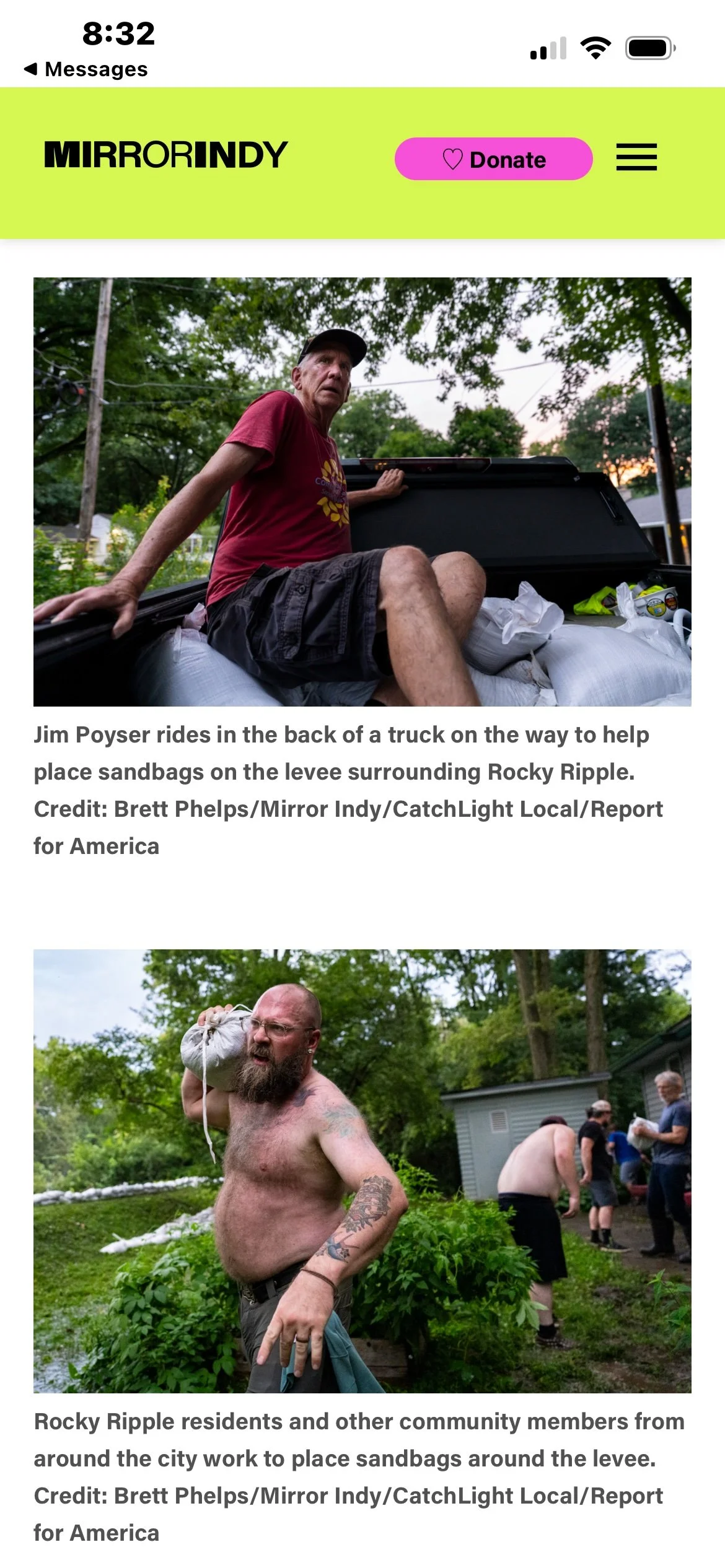
A screenshot of a Mirror Indy story, released the next day
Warmer air holds more water vapor
It’s been over twenty years now since I “discovered” the climate crisis. It was more or less by accident that I did so. But when I did… wow, I realized this particular environmental phenomenon was already well out of hand, and had been for decades.
The science is rather simple. Extracting fossil fuels from the earth, a process of burial that took millions of years, releases climate pollution into the atmosphere, creating a kind of blanket around the earth, warming the temperature.
Warmer air holds more water vapor. Just ask your mirror in the bathroom after a hot shower. There’s more moisture to fall to the earth, in the various forms. In August, here and beyond, it was rain. A whole lot of rain.
There’s more to the science, of course! But the basics are so very simple, and the consequences so stark, it’s a mystery why it’s a subject so buried, like the fossil fuels themselves.
I became the Cassandra in the climate coal mine, starting in about 2006, creating humor websites about climate, posting on social media, writing about it for NUVO and other publications, and talking to strangers in line at the grocery store. But the situation didn’t seem to change much, at least as far as I could see.
The science might be basic, but the psychology is more complex. Our brains are wired to think about the danger of now, not later. We’ve also become mindless consumers through a century or more of mass production, advertising and obsolescence. Thus, easily distracted.
We are also creatures of community, and tend to look at each other’s behaviors to reflect on our own. If we see others consuming, it seems like it’s okay for us to do so as well.
We also like to blame each other, and that’s where the climate movement really gets into trouble, the blaming part. How many children do you have? How many dogs? How many burgers have you eaten this week?
And all the while, the billionaires are the biggest offenders by far, and they’ve turned us against each other.
But you know all this. We all know this. And it doesn’t really change anything until the catastrophe comes.
And boy did it come.
Evacuation is nigh
On Friday night, August 14, I was in the middle of a Bike Party adventure, Indy’s monthly bicycle ride. It was a nice night and so there were hundreds of bicyclers all riding from downtown to Major Taylor Velodrome. We started downtown, headed west, which means we were often near the swollen White River.
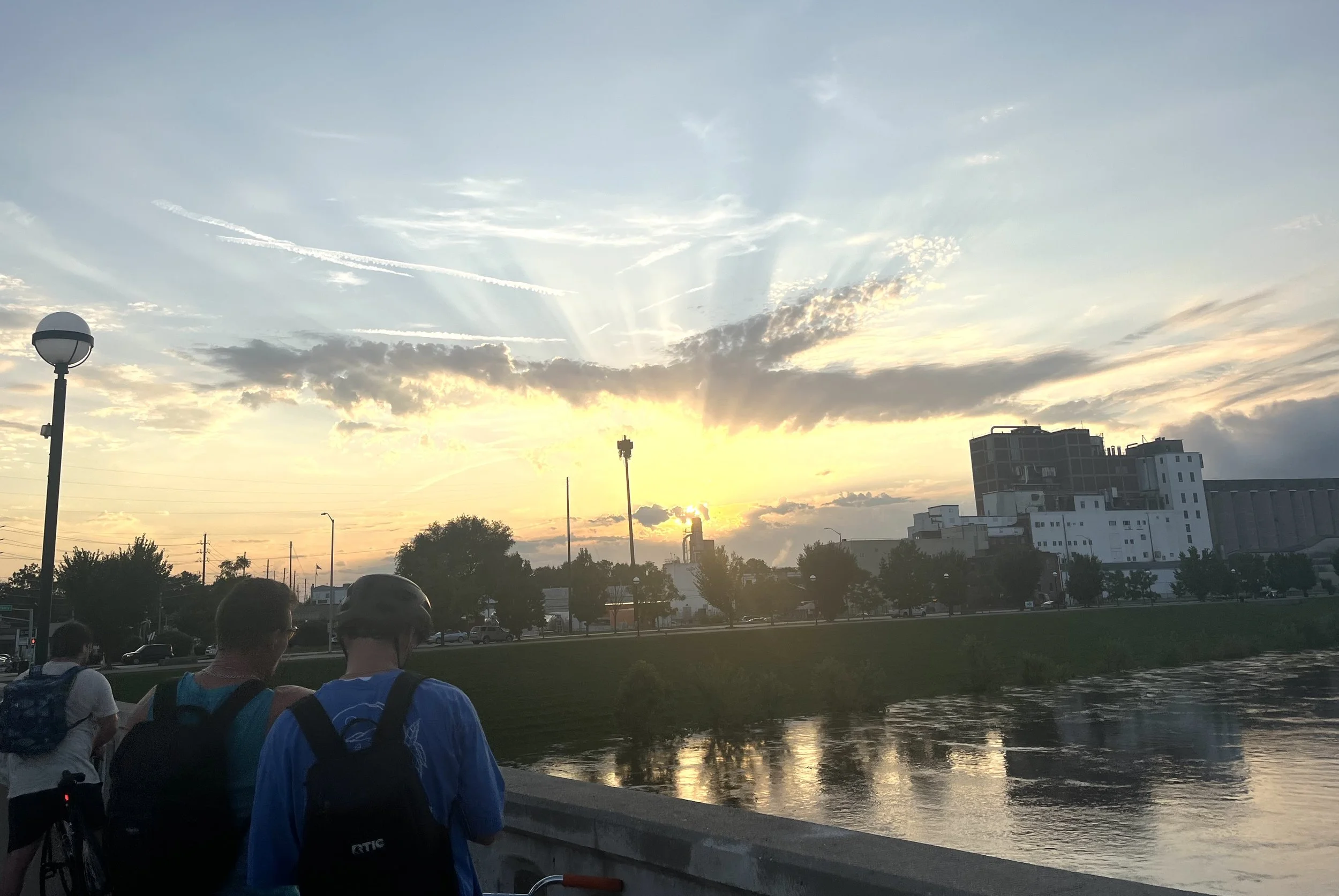
The view from Bike Party.
I was alarmed by the rising waters, but I was also in the groove, riding with those hundreds of cyclers — until my wife texted: “Come home, we’re being evacuated.”
By the time I arrived home, friends were there, helping Patricia go through what we were going to take with us, what we were going to carry upstairs, and what we were going to leave to the Fates.
Then we left the neighborhood to stay with friends on high and dry land in an adjacent neighborhood.
The next day I returned to see how things were looking. It was early afternoon, and the river was rising. And rising.
The news was spreading as fast as the river was a-rising. There’d been a derecho in Gary a day or two before. Storms had been dumping rain all over the midwest. The river level was still cresting in Nora, there were floods in Anderson, Noblesville, and elsewhere. Surely Ravenswood would be under water, and Rocky Ripple was certain to follow.
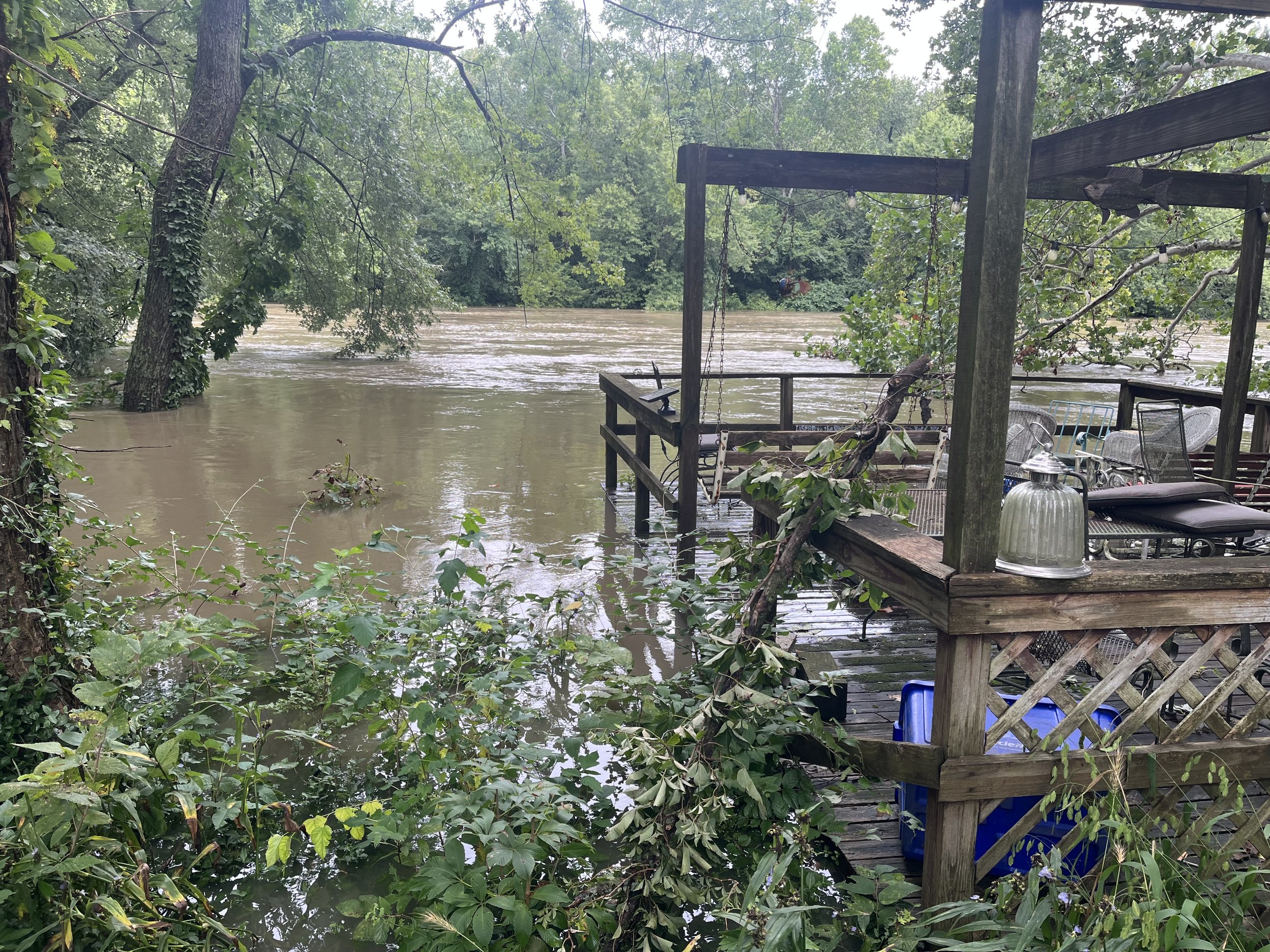
The White River, rising in a neighbor’s back yard
I sat in my neighbor friend Scott’s backyard and watched the river rise and thought “Well this is what finally happens to the climate catastrophist. His neighborhood is flooded, his house is flooded, and swept away.”
The levee in Rocky Ripple is made of dirt. It’s really just a berm rather than a levee, and I don’t say that as a hydrologist, I just like the sounds of the words.
If one spot in the berm fails, there’s your breach: the entire neighborhood is flooded. If one tree falls, pulling up the root ball and breaking the levee, the entire neighborhood is flooded.
It had an air of inevitability, as inevitable as the climate catastrophe feels today.
There was activity in the neighborhood, I’d caught wind of that. Some sandbagging. But I figured I would head back to the house on the hill. Less than 18 months ago, I’d had a long stint in the hospital, with open heart surgery, and an aortic valve aneurysm that could have killed me or rendered me dilapidated with a severe stroke.
I was not going to be a hero under these circumstances, a diminished physical ability coupled with an “I told you so” attitude.
I left Scott’s backyard and as I rode my bike on 53rd Street passing by the park that sits in the middle of Rocky Ripple, I saw dozens of people in the sandpit of the volleyball court. Wielding shovels.
It was around 330 or 4 at that point. What on earth were they doing there?
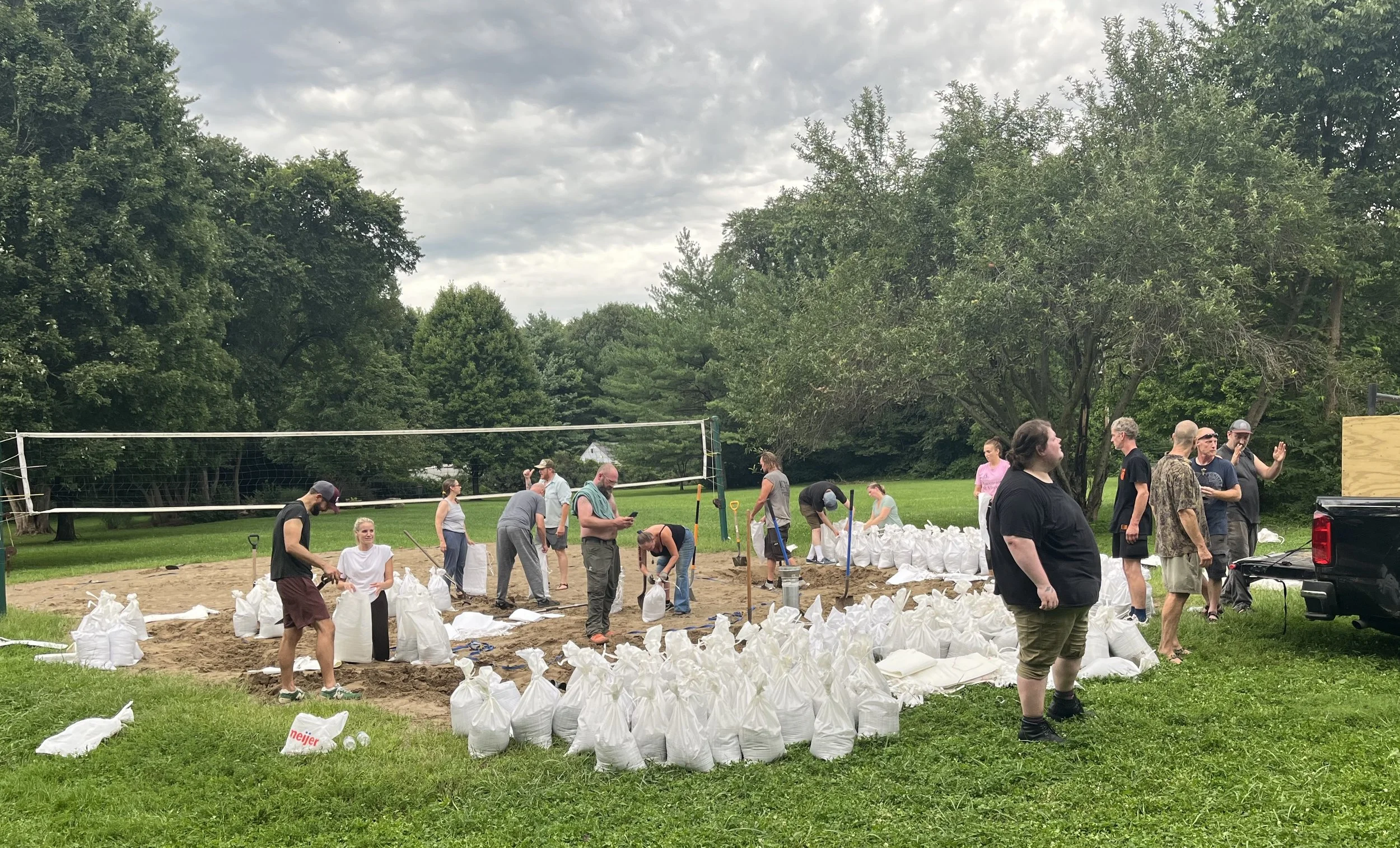
What are these people doing?
I don’t know what made me stop to see what was going on. Was it guilt? Curiosity? Camaraderie? Probably a combination. I parked my bike, and soon found myself loading 45 pound white bags of sand into the back of pick up trucks, and into the hatchbacks of Honda Fits.
I joined a crew of sandbaggers by climbing into a pick up truck. We were in a fleet of four or five trucks and cars dispatched to a vulnerable part of the levee to place the sandbags into the berm to stop the river from burbling through.
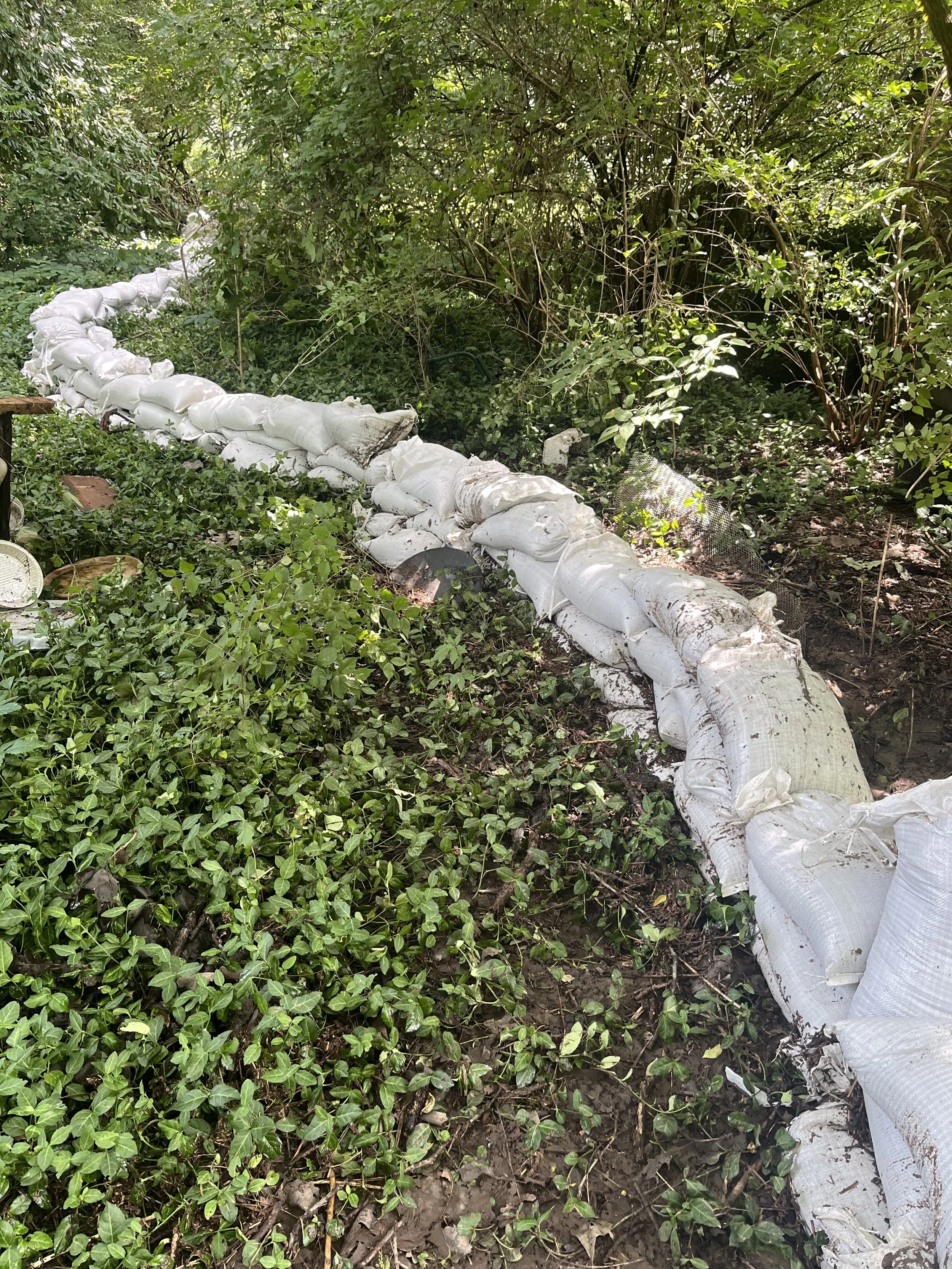
We also placed sandbags on top of the levee, one row, then two rows, sometimes three rows high.
We formed bucket brigade lines, so each of us could stand in one place, passing the bags from one person to the next.
What was I thinking, sand bag cradled in my arms, as I watched the river rise, just inches from the top of the levee?
At the O’Cays Corral
In the early 80s I was at a bar in Madison, Wisconsin, the O’Cays Corral, and a band called The Refrigerators was playing. Not to be confused with the band that exists today in the New York State area. They were a punk band, and there were about 10 people slam-dancing with another 20 forming a periphery around the dance floor. I was in the middle, slamming around with total strangers. It got very kinetic, and inevitably, one of us would be thrown from the scrum and into the periphery. There, the standers would their job and throw us back into the fray.
I had never experienced this before, and as much fun as it was, it was also interesting from, I guess, an anthropological perspective. From there I got way into this. I read William McNeil’s “Keeping Together in Time,” an exploration of how marching and dancing have created cohesive social structures since the beginning of human history.
In the 70s, I sold hotdogs at the Notre Dame stadium when I was in high school, so I had been there when people were passed along, down and up the stands, during games.
And there was the wave as well, 10s of thousands of people dancing in synchronicity. In the following decade I would be involved in numerous crowd surfing experiences, in Bloomington, Indianapolis, and elsewhere.
I loved learning about this social cohesion, because it gave me the sense that this connection between people is real, powerful, and cooperative.
Thus the bucket brigade of sandbags.
Working together cooperatively ensured our evolutionary success, it took a team to bring down the mastodon and feed the tribe. It took a team to protect the most vulnerable members of a tribe. It took a team to develop technology to create warmth and comfort and eventually, the ability to dig up fossil fuels to assist our everyday tasks.
Isn’t this ridiculous?
What else was I thinking while I was sandbagging?
I was thinking that this was ridiculous, that we could never fight the massive volume of water that was headed our way, an unstoppable symptom of the climate crisis.
But I kept working with the crew anyway. We ran out of bags and drove back to the park for more.
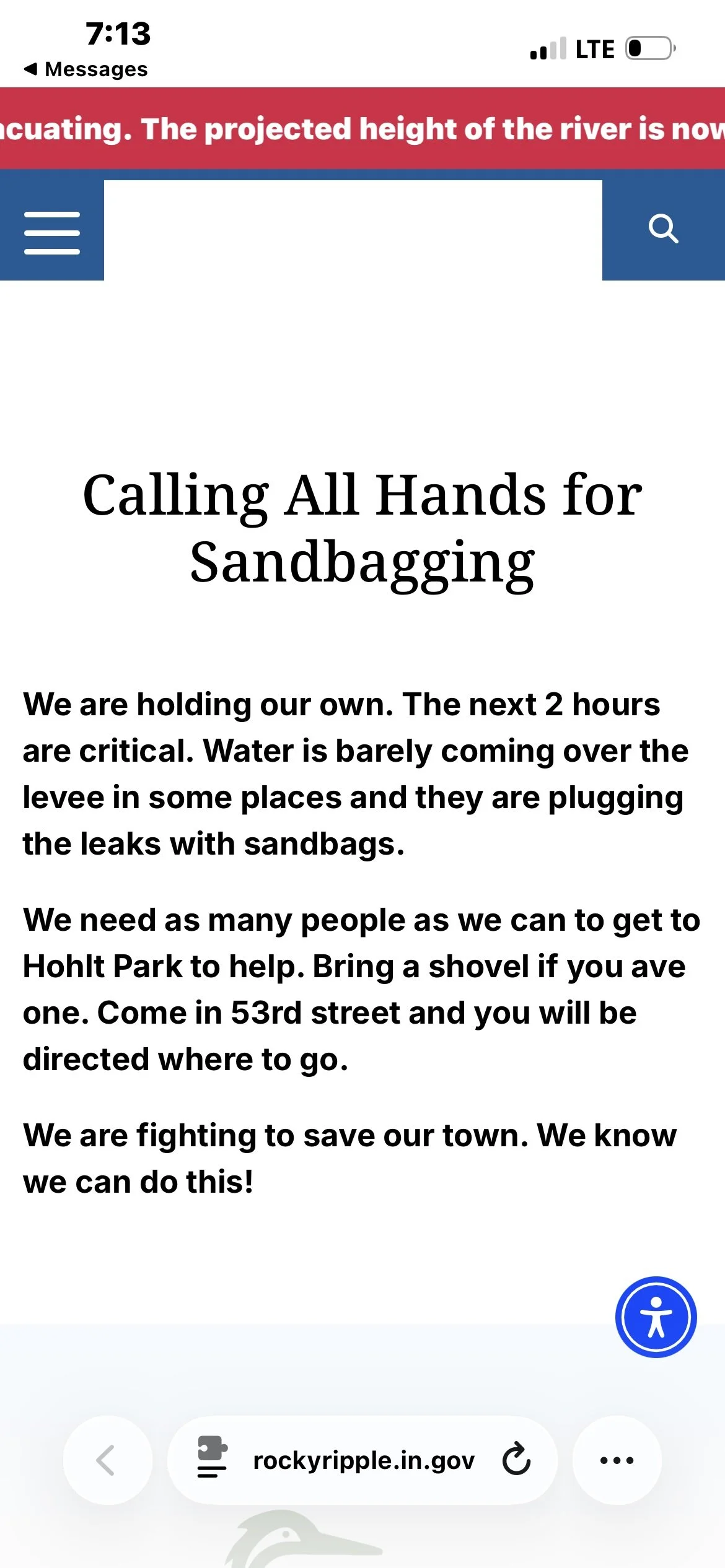
The message that went out to all Rocky Ripple residents.
It was early evening by then, and more people had arrived to bag sand, taking sand directly from the volleyball pit. Yeah, you might have heard about that. Sandbags and sand were delivered to town hall by DPW, in the early afternoon on Saturday, but the sand ran out fairly quickly. Someone had the bright idea that there was a WHOLE LOT of sand in the volley pit at our community park. And so that’s when the sandbagging operation was moved a couple blocks to Holht Park — which is where I found it.
Night fell.
We loaded up more trucks and cars. One man in my crew lived somewhere else in the city; he knew no one in Rocky Ripple, he’d just heard about what was happening online, and had come to help. I knew his name at the time, but it is lost to the mists of time now.
He was not the only one. People were arriving from all over the city to help. I later learned there were four or five other crews dispatched to other areas of the levee. There were 20-25 people on each levee crew, and there were a 150 or more on the sandbag crews, comprised of kids, people in their 70s, and everyone in between.
Back and forth, back and forth. When I returned to the park in an empty truck, I would see my daughter, my son in law, my wife, my granddaughter. Friends, neighbors, strangers. Food and water arrived to sustain for the sandbaggers.
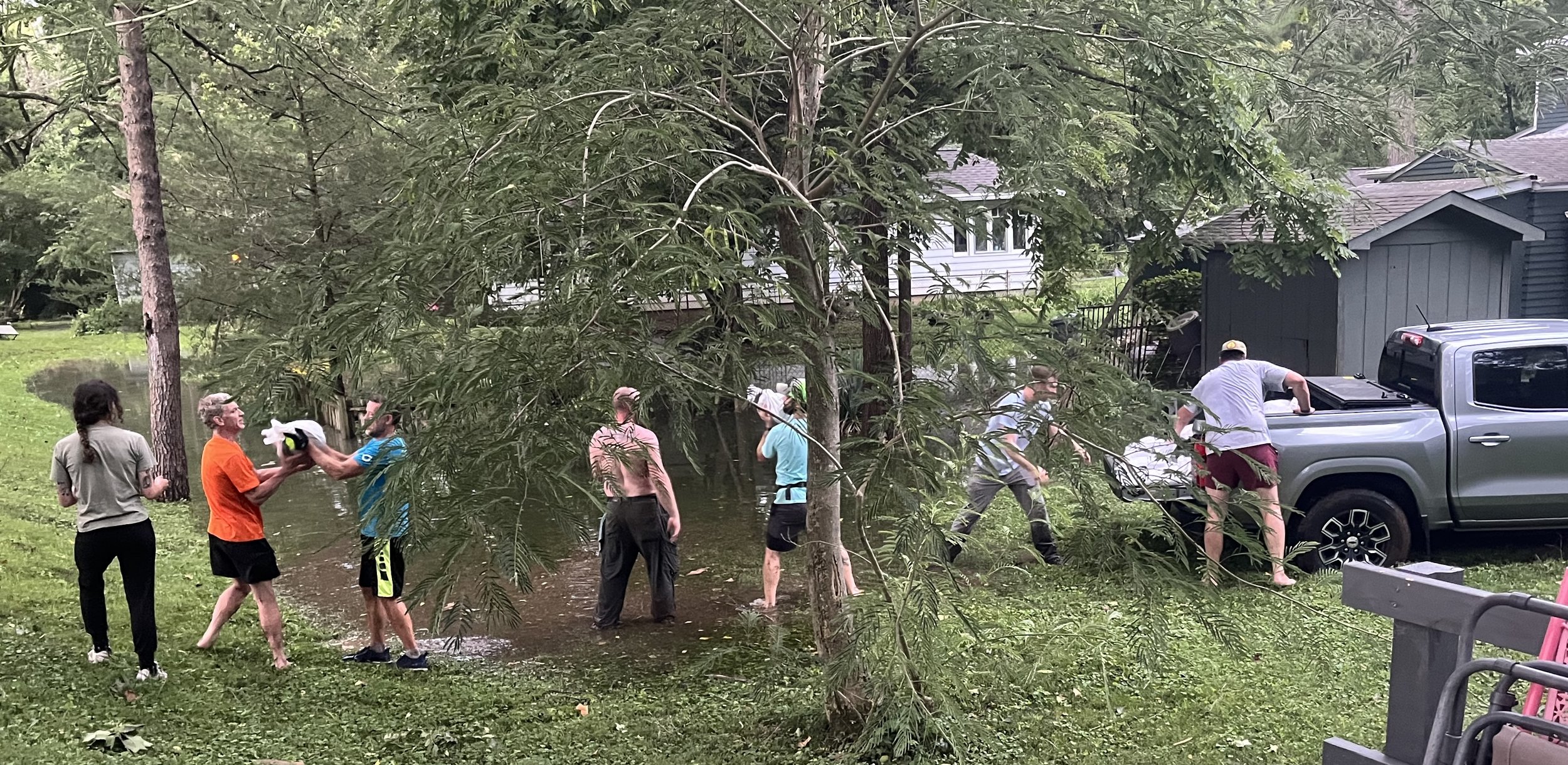
A sandbag bucket brigage
News came in, the river HAD crested up north, and in fact there’d been some kind of breach where the river had flowed into a giant quarry, the Martin Marietta quarry. Thank you for siphoning off 9 billion gallons, Ms. Quarry!
I watched as the river rose up to the level of the stacks of sandbags — and stopped.
Had there been no sandbags to stop the river, it would have spilled over into the neighborhood.
I had to stop by 10 pm — six hours of schlepping sandbags had done me in.
I was thinking of the scene in the Coen Brothers’ version of “True Grit,” where Rooster Cogburn, played by Jeff Bridges, tells Mattie he “bows out.” I love that scene, because you can feel his utter exhaustion, and the hopelessness of the situation.
I often feel like it’s time to bow out.
But then, someone called out “Who’s on a bike?”
I was awakened from my pity party slumber and stepped forward.
This is true
At that point, the organizational structure of the operation had become centralized by the fast-depleting sandpit. We had been decentralized at first, with texting, shouting, and gossip being the chief means of organization. But by ten o’clock that night there was a chalkboard with a map of Rocky Ripple. Tenuous spots in the levee were marked with an X, and I was sent to visit an X and come back with updates.
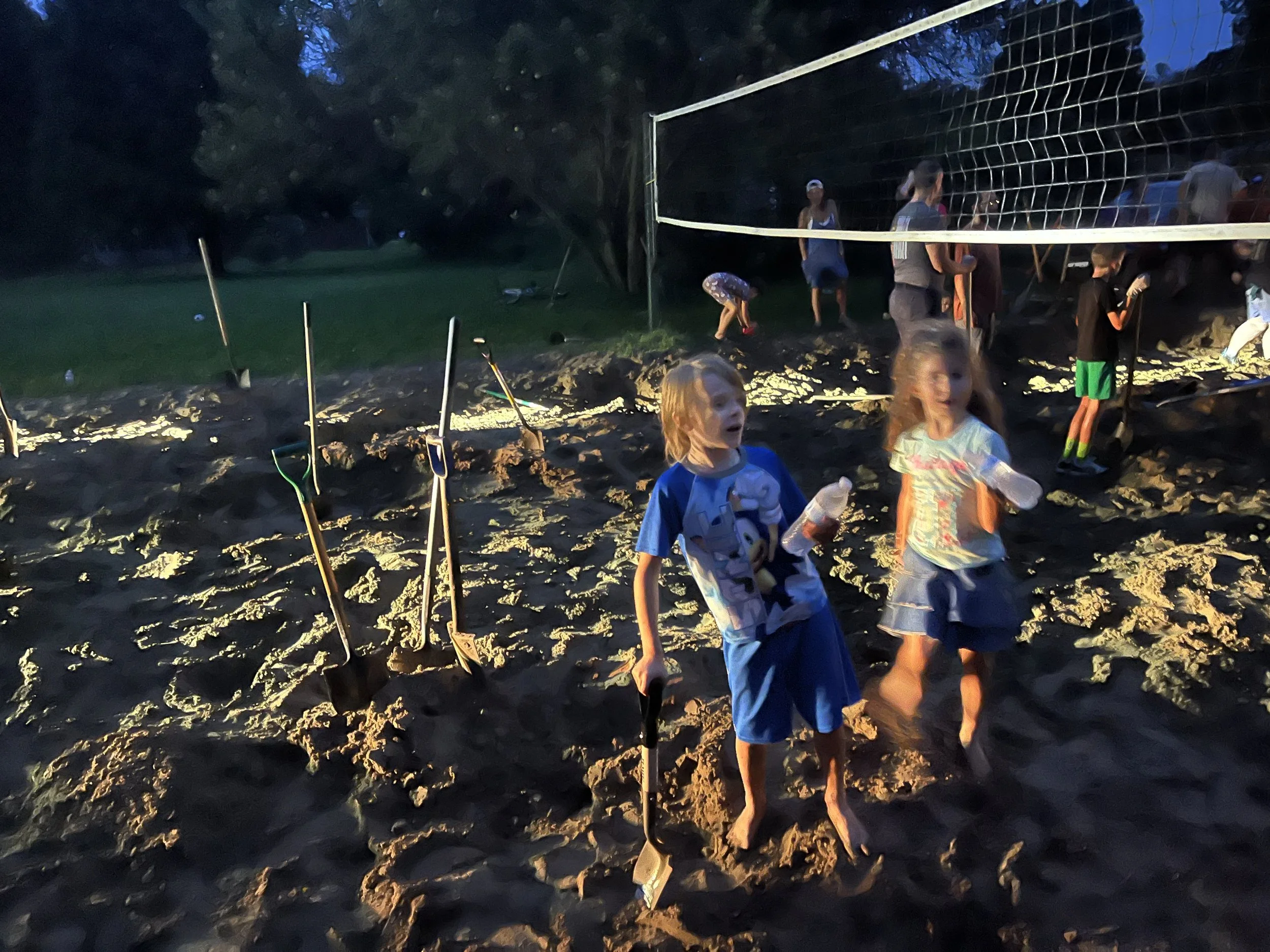
No matter the age, everyone helped.
It was exhilarating! I was still being useful, but this was much easier on my body. I did that for about an hour before I really hit my limit.
I don’t remember how, but I biked up the hill to the high and dry spot, to rest that night.
It is said that 1000 people placed 15,000 sandbags, literally saving Rocky Ripple, and I am here to tell you that this is true.
There were no FEMA coordinators, no military colonels, just a bunch of Rocky Ripplers and nearby friends and strangers who answered the call. With some help from the DPW.
We didn’t know who people voted for, or what they believed in, we simply came together to address a vulnerable berm.
Everyone has their own story about that night. There was, for example, a confrontation on the 53rd Street Bridge that will be a central scene in the movie that might get made someday.
Many worked far far harder than I did. Some folks worked ALL night long. But everyone chipped in, whether small, large, or somewhere in the middle. It took everyone.
They say the best antidote to anxiety is action, and that night, such a disaster to so many elsewhere, was a balm to my worries. Maybe, together, connected to our only home, and thus to each other, we can figure out how to save this home, after all.