
Steel mills, Tumblr, and AI Data Centers
By Kevin Nichols, ECI Statewide Coordinator

Kevin at 18 years old.
When I was 18 years-old, I thought that advances in digital communications had revolutionary potential and would imminently replace the US industrial economy with safer, greener options. That notion is almost laughable now, but just over a decade ago it seemed like a given. This was the era of disruption, innovation, and “Don’t be evil”. The internet was democratizing information access and allowing us to build community regardless of geography. The Arab Spring revealed the potential of the internet as a catalyst for mass mobilization and progress. These days, the lofty promises of big tech no longer appear so idealistic. I am now 31 years-old and the same companies that I initially understood to be insurgent disrupters in communications and information have become well-established corporate behemoths. Ever increasing monetization of digital content has resulted in a shell of the internet we were promised. Yes, big tech is still intent on transforming our communities, but as AI data centers come for our land and resources, skepticism about the value of this transformation is steadily gaining momentum.
Let me reach into the memory banks to try and understand what initially made me so hopeful about the potential of technology. I graduated from Crown Point High School in 2012, when the US economy was still recoiling from the shock of the 2008 financial crisis. I forged my earliest digital identity on Myspace at age 11, joined the masses in jumping ship for Facebook at 13, and developed my political and social opinions on Tumblr at 16. Smartphones were not yet universal, but their ubiquity was on the horizon. Tech executives tried to cement themselves as visionaries with over-the-top stunts and hubristic declarations. They took bold stances on climate change too, in stark contrast to previous titans of industry. My generation was tasked with remaking the American economy and all of this made me optimistic that the internet would play a major role, even in Lake County, Indiana’s industrial center.
My dad earned a living working for a major steel mill in East Chicago, Indiana, but the days of ample employment opportunities in steel had long passed. The preceding decades had seen automation and mass layoffs, resulting in economically-enforced racial segregation across northwest Indiana. Towns like Crown Point experienced a boom from white flight while the communities that actually house industrial sites, like East Chicago and Gary, suffered poverty and blight.
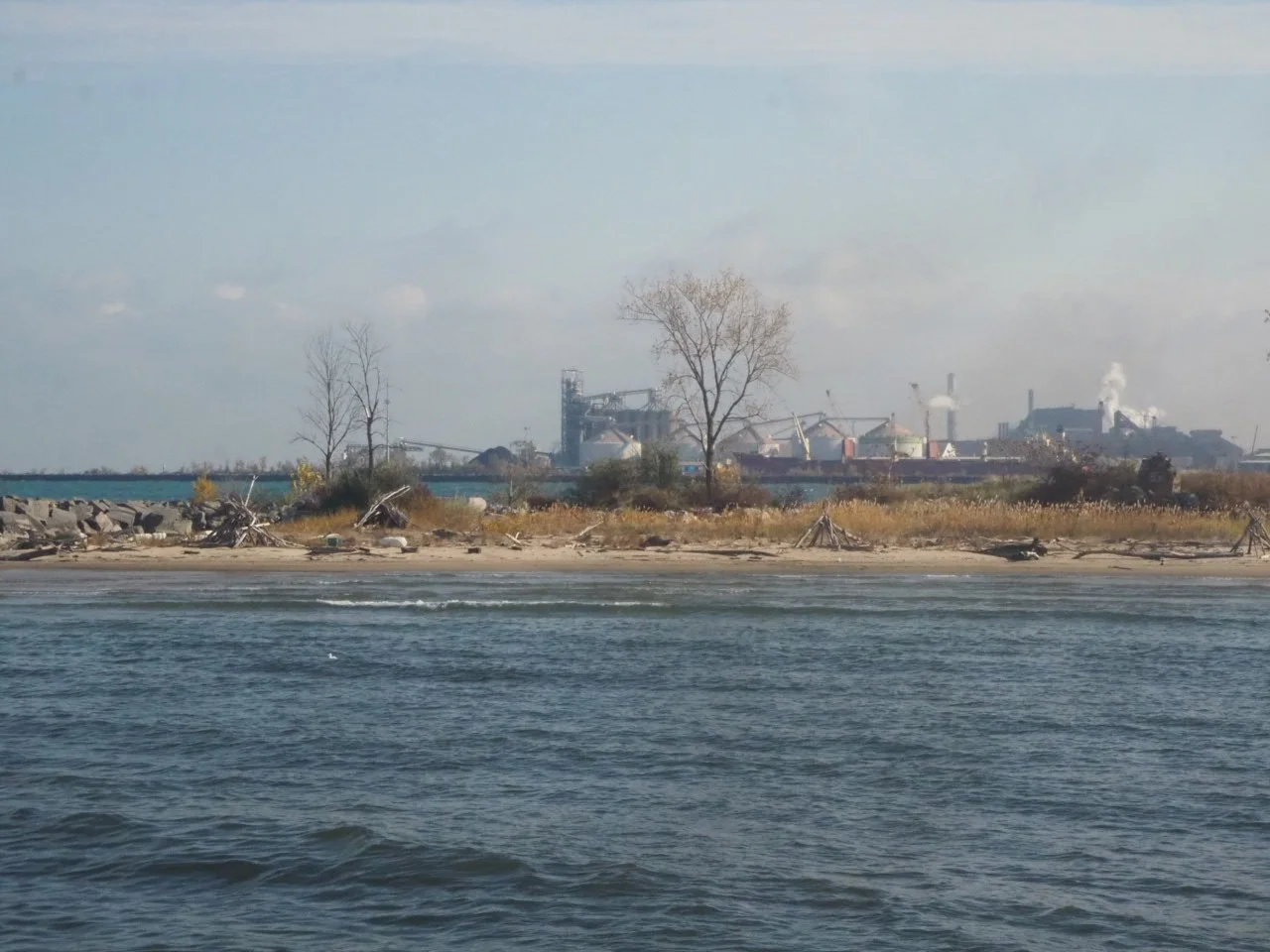
Steel Mill in north west Indiana
Deindustrialisation brought my family to Indiana from New Jersey in 2007 when the much smaller mill my dad cut his teeth at shuttered. The shock of seeing him laid off made me keenly aware, even as a teenager, that the industry that sustained our middle class lifestyle could no longer be counted on. The economic fallout in nearby communities showed me what could happen when industry failed. Optimism around technology felt compulsory, because what else was there to be hopeful about?
In the early 2010s, young people were encouraged to pursue STEM degrees, and were handsomely rewarded upon graduation with high-paying jobs offering perks like free meals, casual dress codes, and in-office razor scooters. The best and brightest in my class were all enrolling in computer science programs, or if they had more altruistic intentions, going after careers in environmental sustainability. Tech-skepticism and climate denial were still in the air, but both dispositions were, to me, mostly held by stubborn boomer luddites. To the rest of us, it was impossible to ignore that the future was here, at the crossroads of an undeniably warming planet and a public caught up in a fervor of techno-optimism.
In the fall of 2012, I enrolled at IU Bloomington to study media production and analysis. Entry-level course instructors warned of the impending collapse of the legacy media structure and the emerging dominance of digital media. Everywhere I looked, the digital transformation was taking over. Mass-mobilizations like Occupy Wall Street only made me more optimistic in the democratizing capabilities of technology. The future was here, adaptation was necessary, and the benefits far outweighed the cons.
Of course I championed the digital revolution. The industrial jobs available in northwest Indiana weren’t just unreliable, they were completely unappealing! Steel mills are dangerous places that pose serious health risks to workers and the surrounding communities. I had seen the black gunk my dad left behind in tissues after he blew his nose. I had early memories of him coming home from the night shift with burns on his body and face. I deeply feared the prospect of spending decades in a steel mill. Good riddance, I thought. I never would have predicted that with the advent of AI, massive data centers would one day threaten our health and resources without even providing employment.
The same techies who were once wooed by ping pong tables at the office are now facing record layoffs. Consumers and users are also suffering. Instead of users generating content, large language models do it for us, completely disregarding decades of intellectual property law. End users are expected to greet AI-prompted emails and images with the same sense of magic and curiosity that we once saw in previous digital innovations, but the sheen has clearly worn off. The pitfalls of data centers are multiform. As the machines become smarter, so have big tech’s mechanisms of surveillance. I used to feel like looking at a banner ad next to my social media feed was a worthwhile tradeoff for global connectivity, but the sophistication of targeted ads and algorithmically generated content has led to an insidious decline in the quality of user experience. Modern websites almost make me long for the comparatively simple manipulation of TV advertisements.
The internet has become the dominant communication medium of our time and the same societal ills that were present before have been baked into the machine, like isolation, surveillance, and yes, fossil fuel emissions. These advanced computing systems have an industrial footprint that is far greater than any previous iteration of the internet, consuming energy at rates equivalent to entire nations. Were big tech’s climate promises just a Trojan horse to gain economic dominance?
Big Tech drew us in with community, information, and user-generated content. They promised a green, paperless future. We did not yet understand that we were sacrificing our privacy for something that could have such a significant toll on the planet. Now, after decades of mining our data, Big Tech has the keys to the world’s information and little to no oversight on how they use it. I don’t imagine there’s some coherent master plan, but whatever comes next, it seems that the current vision for the future includes industrial-scale energy consumption at our expense. The current permutation of the internet is bringing the true costs into perspective. We are at a moment of reckoning where we must ask: Is any of this even worth it in the first place? Right now, I really don’t think so.